


Coffee is loved by millions — yet for many people, it comes with stomach burn, discomfort, and acidity. If you’ve ever wondered:
- “Why does coffee cause acidity?”
- “Is my coffee too acidic?”
- “Does black coffee cause acidity?”
- “How can I reduce coffee acidity without quitting coffee?”
This is the only guide you need.
In this article, you’ll learn everything about coffee acidity, the coffee pH scale, and how low-acid coffee like FYNZA helps you enjoy coffee again — without the discomfort.
1. What Is Coffee Acidity?
Coffee acidity refers to how acidic (low pH) your coffee is. Most regular coffees have:
- pH between 4.5–5.0, which is considered acidic
- Compounds like chlorogenic acids, quinic acid, and caffeine that irritate the stomach
This acidity can cause:
✔ Heartburn
✔ Acid reflux
✔ Bloating
✔ Stomach irritation
For sensitive stomachs, this becomes a daily struggle.
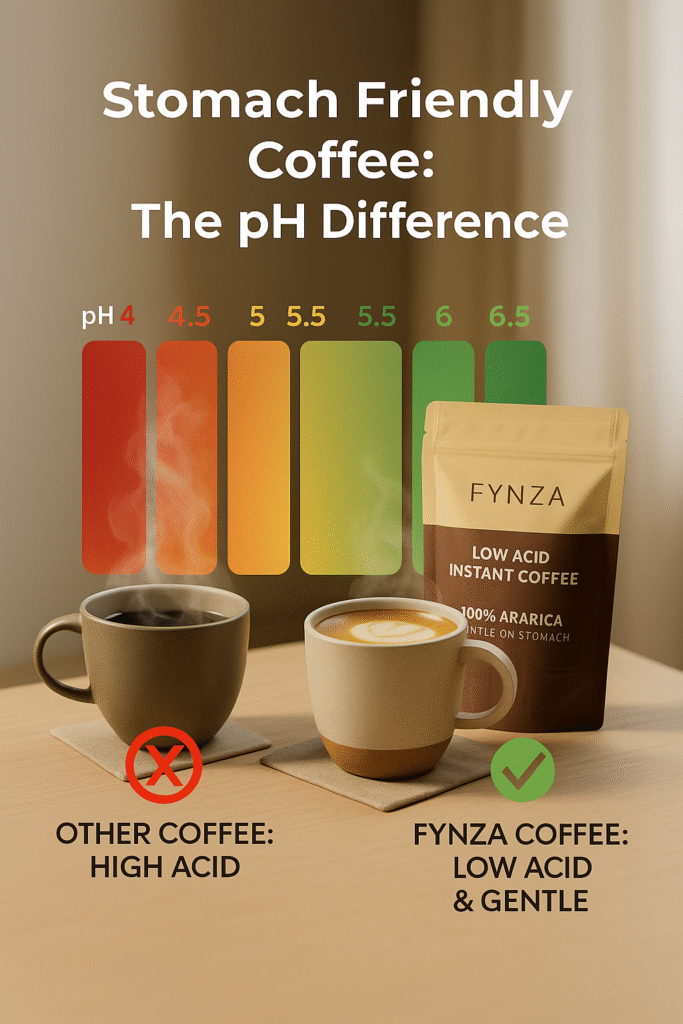
2. Coffee pH Scale
Here is the pH comparison:
- pH 7 = neutral (water)
- pH 4.5–5 = regular coffee
- pH 5.5–6.5 = low-acid coffee
The higher the pH → the gentler the coffee.
3. Why Coffee Causes Acidity
Regular coffee triggers acidity because:
1️⃣ Chlorogenic Acids
Break down into quinic acid, which increases stomach irritation.
2️⃣ Caffeine
Stimulates acid production in the stomach.
3️⃣ Darker roast ≠ lower acidity always
Most instant coffees are medium roast → higher acidity.
4️⃣ Empty stomach consumption
Coffee on an empty stomach = higher acid release + irritation.
4. Does Black Coffee Cause Acidity?
SHORT ANSWER: Yes — if it’s regular coffee.
Black coffee contains:
- High caffeine
- High chlorogenic acids
- Low pH
These make it harsh on sensitive stomachs.
But low-acid black coffee is easier to tolerate.
5. Coffee Acidity vs Coffee Acids (Important Difference)
- Coffee Acidity = stomach acidity (discomfort)
- Coffee Acids = flavor acids that create fruity / bright taste
Your stomach reacts to coffee acidity, not flavor notes.
6. Symptoms of Coffee-Induced Acidity
- Heartburn
- Burning sensation
- Acid reflux
- Gas / bloating
- Sharp stomach discomfort
- Nausea after drinking coffee
If you experience any of these, you likely need low-acid coffee.
7. How to Make Coffee Less Acidic
You can reduce acidity by:
✔ Shift to dark roast
Naturally lower acidity than medium/light.
✔ Add milk / creamer
Neutralizes acid.
✔ Avoid empty stomach
Eat something first.
✔ Switch to Arabica
Arabica beans have lower acidity than Robusta.
✔ Choose low-acid instant coffee
Easiest + fastest solution.
8. Low-Acid Coffee: The Real Fix
Low-acid coffee is:
- Gentler on stomach
- Higher pH
- Made using special roast + process
- Best option for acid reflux / sensitive stomachs
If you love coffee but hate acidity → this is the solution.
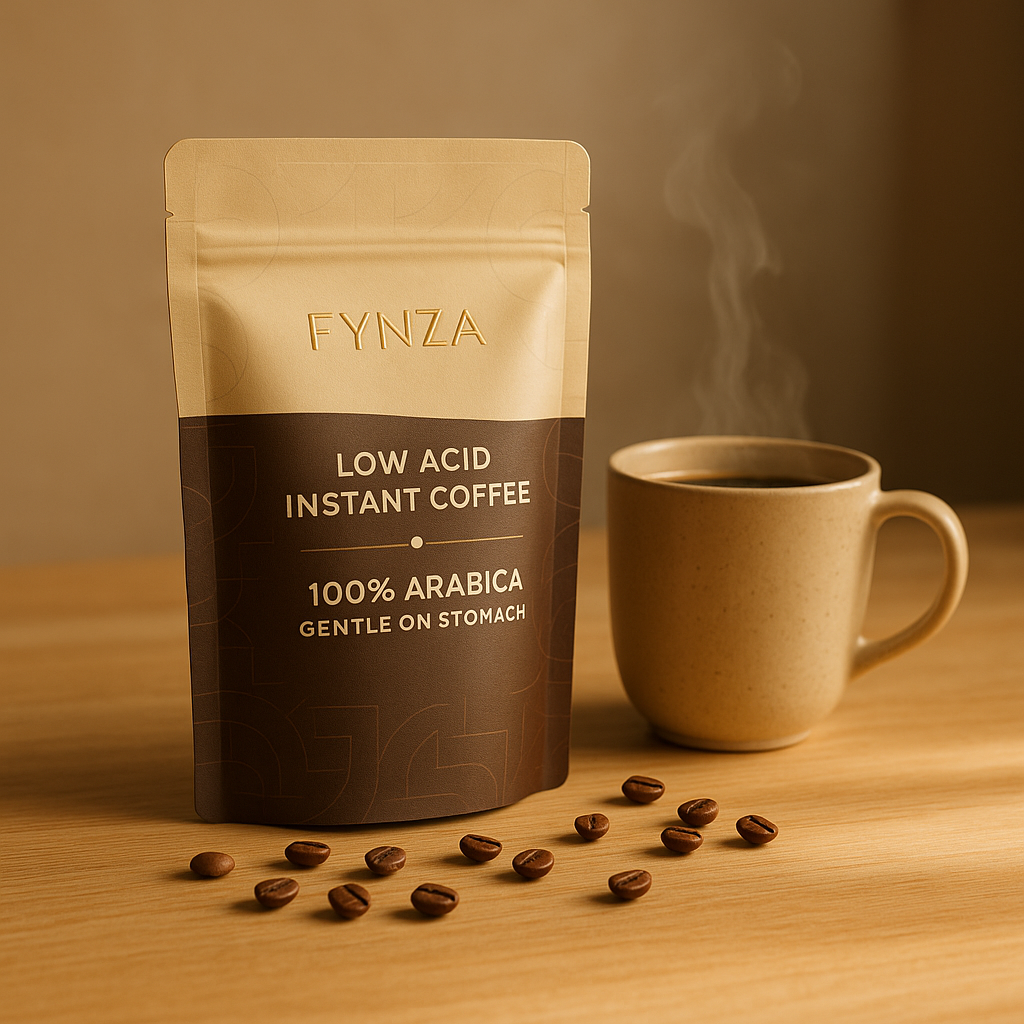
9. Why FYNZA Low-Acid Coffee Is Different
✔ 100% Arabica
✔ Naturally low acidity
✔ Special roast profile
✔ Gentle on stomach
✔ Smooth, rich flavour
✔ Perfect for acidity-prone drinkers
Internal Link
Explore FYNZA Low Acid Instant Coffee – Shop Now
10. FAQs
Does coffee increase acidity?
Yes, regular coffee can. Low-acid coffee reduces this effect significantly.
Is low-acid coffee weak?
No. With 100% Arabica it tastes smoother, richer, and premium.
Can I drink coffee with acid reflux?
Switch to low-acid coffee + avoid empty stomach.
Is instant coffee more acidic?
Most instant coffees are medium roast → higher acidity.
11. Final Thoughts
Coffee acidity affects millions of people — but the answer is not to quit coffee.
The answer is to switch to low-acid coffee.
If your stomach hurts after every cup, it’s not your fault — it’s the acidity.
With FYNZA Low-Acid Coffee, you get the same rich Arabica flavor — without the burn.
Internal Links to Add
Leave a Reply