


If coffee causes acidity, bloating, or stomach discomfort, the real question isn’t whether coffee is bad — it’s what kind of coffee you’re drinking.
In this guide, we’ll clearly compare low acid coffee vs regular coffee so you can decide what works best for your stomach.
No hype. Just facts.
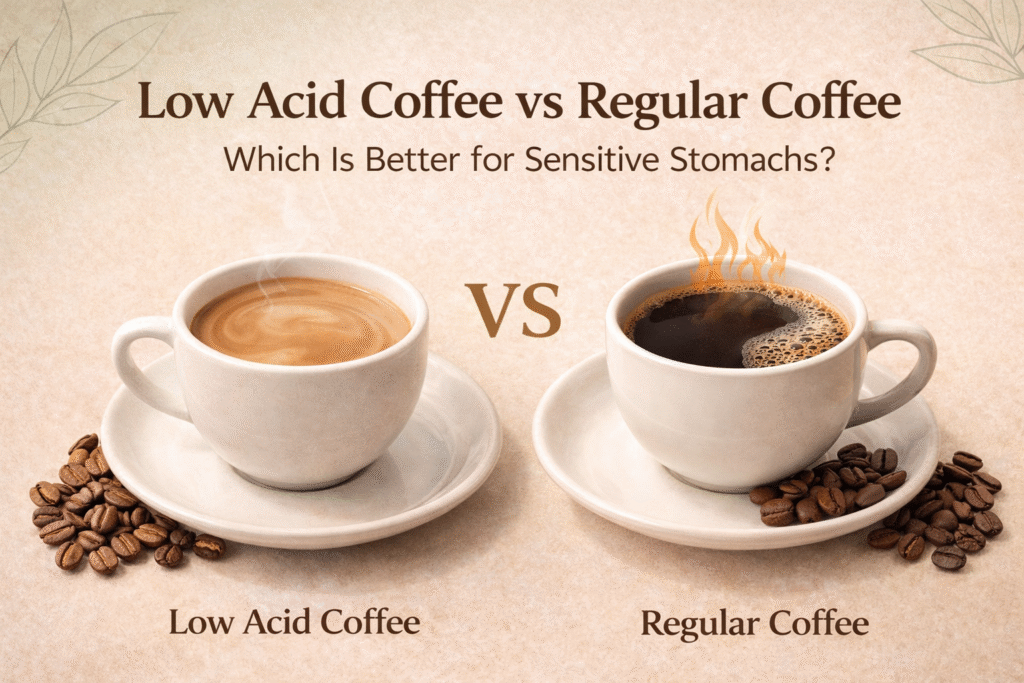
What Is Regular Coffee?
Regular coffee — especially instant coffee — is usually made using:
- Robusta or mixed beans
- Aggressive roasting
- Spray-dried processing
This combination increases regular coffee acidity, bitterness, and harsh compounds that can irritate the stomach lining.
For many people, regular coffee triggers:
- Acid reflux
- Chest or throat burn
- Gas and bloating
- Discomfort after drinking coffee
This is why regular coffee often feels “too strong” for people with digestive sensitivity.
What Is Low Acid Coffee?
Low acid coffee is processed to reduce acidic compounds that commonly cause stomach irritation.
It typically involves:
- 100% Arabica beans
- Controlled, smoother roasting
- Gentler processing methods
The result is coffee that tastes less bitter, feels lighter on digestion, and is often preferred as coffee for sensitive stomachs.
Low acid coffee does not mean caffeine-free — it simply means reduced acidity.
Low Acid Coffee vs Regular Coffee: Key Differences
| Feature | Regular Coffee | Low Acid Coffee |
|---|---|---|
| Acidity level | High | Reduced |
| Taste | Sharp, bitter | Smooth, balanced |
| Digestive impact | Can cause acidity | Gentler on stomach |
| Bean quality | Often Robusta | Mostly Arabica |
| Daily tolerance | Lower | Higher |
This comparison clearly shows why people with acidity often struggle with regular coffee but tolerate low acid options better.
How Coffee Acidity Affects Your Stomach
Coffee naturally stimulates stomach acid production.
Problems start when acidic compounds irritate the stomach lining or when coffee is consumed improperly.
Common triggers include:
- Drinking coffee on an empty stomach
- Highly acidic coffee blends
- Very hot or strong black coffee
For people with sensitive digestion, reducing acidity — not caffeine — is often the key to comfort.
Does Low Acid Coffee Really Work?
A common question is: does low acid coffee work or is it just marketing?
For many people with mild to moderate acidity:
- ✔ Less burning
- ✔ Reduced bloating
- ✔ Better daily tolerance
However, results depend on how you drink coffee:
- Drink after food
- Use warm (not boiling) water
- Limit to 1 cup initially
- Add milk or plant milk if needed
Low acid coffee helps, but habits still matter.
Who Should Choose Low Acid Coffee?
Low acid coffee may be the best coffee for acidity if you:
- Experience stomach discomfort after coffee
- Have bloating or acid reflux
- Avoid black coffee due to irritation
- Want to enjoy coffee daily without pain
If symptoms are severe or persistent, medical advice is recommended.
Many people with acidity don’t quit coffee — they simply switch to low-acid instant coffee made from 100% Arabica beans, which tends to be gentler on digestion.
Options such as FYNZA Low Acid Instant Coffee, designed specifically for sensitive stomachs, focus on reducing harsh acidic compounds while keeping the taste smooth. For those who enjoy coffee but struggle with discomfort, this approach can make a noticeable difference when combined with proper drinking habits.
Final Verdict: Low Acid Coffee vs Regular Coffee
You don’t need to give up coffee to protect your stomach.
For people with digestive sensitivity, low acid coffee is generally a better choice than regular coffee because it:
- Reduces irritation
- Feels smoother to drink
- Is easier to tolerate daily
The smarter decision isn’t quitting coffee — it’s choosing the right kind.
FAQs: Low Acid Coffee vs Regular Coffee
Is low acid coffee caffeine-free?
No. Low acid coffee still contains caffeine but has fewer acidic compounds.
Is Arabica coffee better for acidity?
Yes. Arabica beans are naturally smoother and less acidic than Robusta beans.
Can low acid coffee help acid reflux?
Many people find it gentler, but results vary depending on habits and individual sensitivity.
Is instant coffee worse for acidity?
Regular instant coffee is often more acidic due to processing, but low-acid instant options can be easier on digestion.
Leave a Reply